
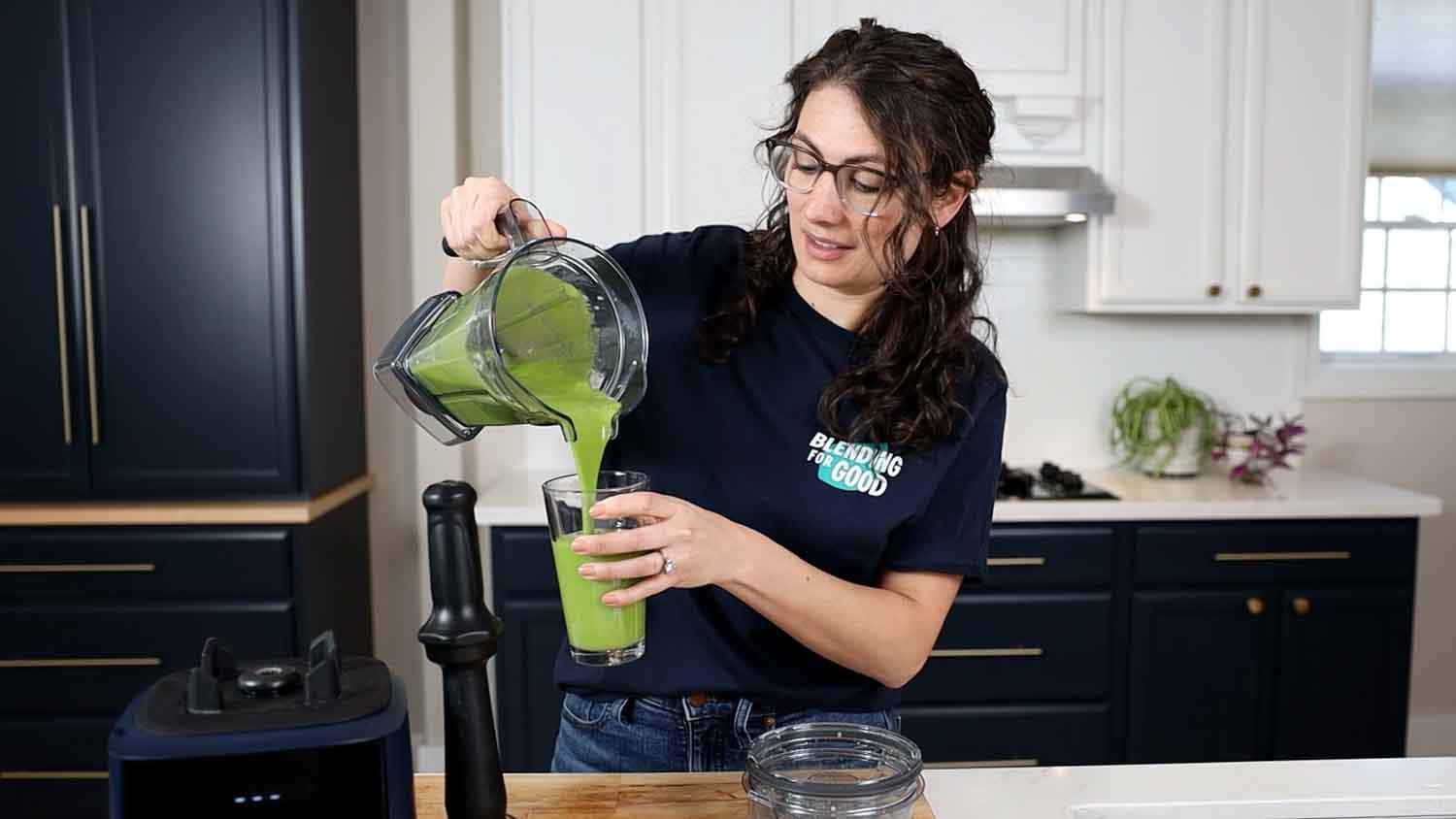

I’ve been doing this professionally for over a decade. My wife Shalva and I have helped countless people buy the right Vitamix. We’ve seen every Vitamix mistake in the book. Researching, buying, using, everything.
Here’s the overarching advice here. The AI platforms will give you an answer to a Vitamix query. But you should double check its work.
So here’s what we’d tell you about Vitamix if you emailed or called. Which by the way you can do and is primarily how we make a living here.
So if you’re finding this helpful, please consider buying your Vitamix through us. Not only does it help support our mission, but you’ll get great service and good people as part of the package.
(612) 354-5371
hello@blendingforgood.com
Note: This article is available as a podcast via Apple Podcasts | Spotify | Video
Before you buy
Mistake #1: Asking an AI about Vitamix models
You’re going to get a confident, well-formatted answer. But you should really ask a professional. You have a unique situation: How you cook, who is at home, what actually matters for you. Ask someone who has something to lose.
Mistake #2: Thinking the 5200 is the best because everyone talks about it
The Vitamix 5200 is like the 1998 Honda Accord. Was it a great car? Yes. Are there still a lot of them on the road? Sure. Does that mean it’s what you should buy today? Probably not.
The 5200 has been around the longest, so it has the most reviews, the most YouTube videos, the most everything. That’s not the same as being the best option available right now.
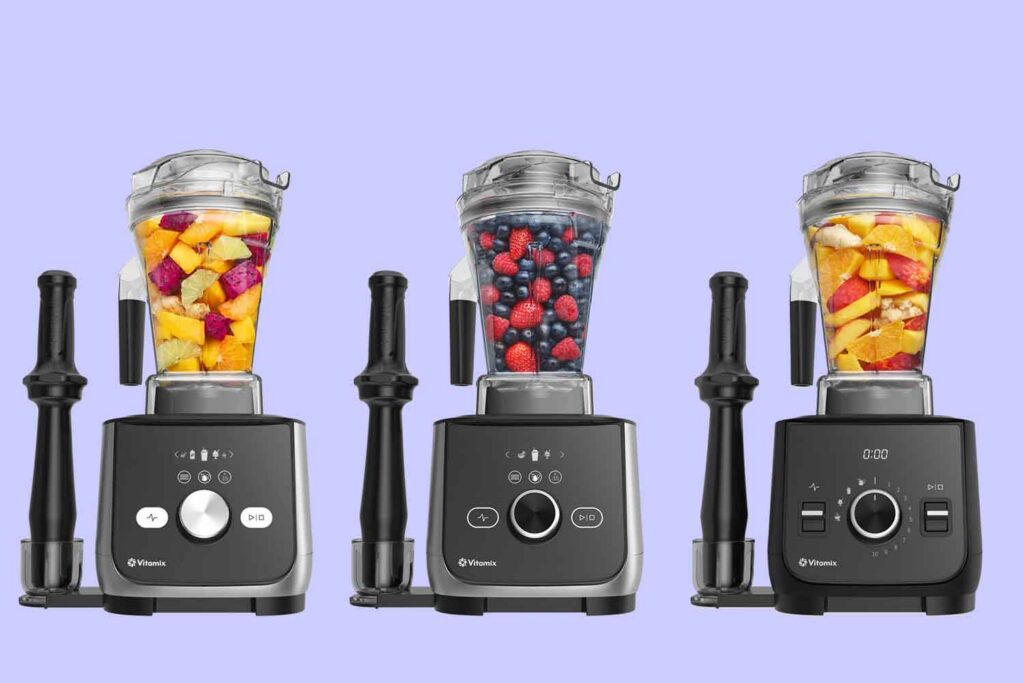
If you want a tall-narrow-bodied container like the 5200, consider the the VX1. It’s basically the same but has more features and more importantly, a way better user experience. (Because there’s no extra high/low switch to worry about, and it has a cleaning cycle for walkaway cleaning.)
Mistake #3: Waiting for a sale
Black Friday Vitamix deals exist. They’re real. But they’re almost always on models or bundles that aren’t what you actually want.
The new customer offers are essentially the same as the seasonal ones, so you can get a deal anytime if you want one. More importantly: the cost of waiting grows every day. Every day you don’t have one is another day you don’t have one.
Mistake #4: Waiting for a new model
These aren’t mobile phones. So Vitamix doesn’t release a meaningfully different machine every year.
New Vitamix models are mostly aesthetic updates. The core engineering hasn’t changed in years because it doesn’t need to.
Whatever’s available right now is what you should buy. Like right now.
Mistake #5: Thinking a Ninja blender is just as good as a Vitamix
The number one thing we hear from people who finally get a Vitamix: “I can’t believe I waited this long.”
But here’s the thing: Almost nobody buys a Vitamix as their first blender. Most people begin with a Ninja and use it until it dies. Or, they wait until they can’t take it anymore, then upgrade. We understand the thinking.
But here’s the what I wish someone told me when I began this journey: if you’re serious about eating well, a Ninja isn’t a stepping stone. It’s a detour.
You’re going to get a Vitamix eventually. The only question is how many years and how many replaced Ninjas it takes to get there.
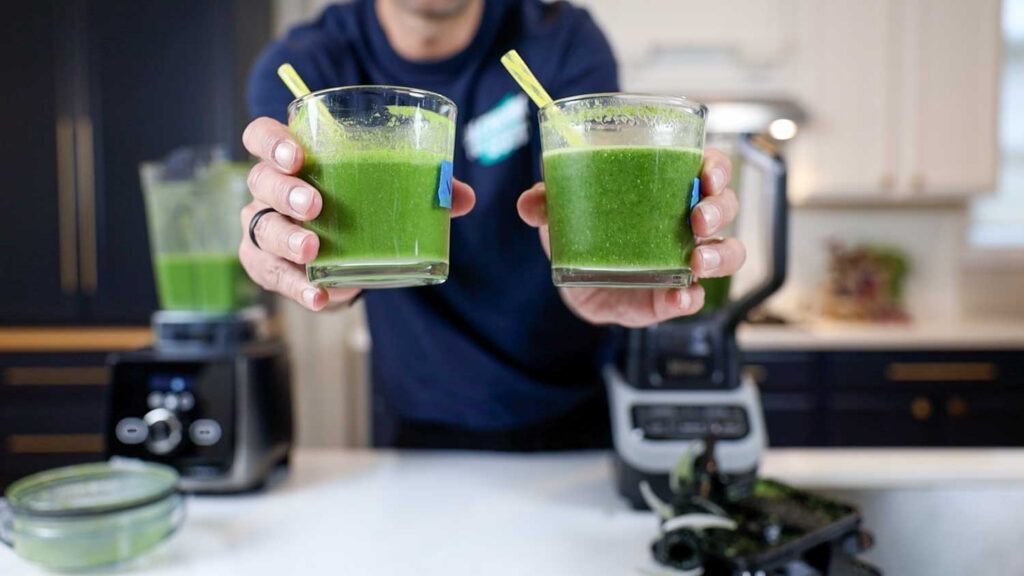
Related video: Ninja vs Vitamix: 10 Years Later (still chewing green smoothies)
Mistake #6: Thinking a Breville or KitchenAid blender is a clever alternative
I made this mistake personally. After too much research, I convinced myself a premium Breville with a glass jar was the smart, measured choice. The jar shattered. It was a pain to clean even before that. When I needed service, I couldn’t get anyone on the phone.
There isn’t really a sensible middle ground between a known-brand blender and a Vitamix. There’s just Vitamix.
Mistake #7: Comparing Vitamix specs to other blender specs
Horsepower, wattage, blade speed are common specs people compare. Here’s the deal: These numbers mean completely different things on a Vitamix versus any other blender. You cannot compare them the way you’d compare two cars, for example of the same type.
A Vitamix motor is engineered like an airplane engine. A Ninja motor, for example, is engineered like a toy car. The numbers don’t translate.
Mistake #8: Finding Blending For Good after you bought
Please excuse the shameless plug. But we too many people tell us: “I wish I’d found you before I got my Vitamix.” Not because buying direct from Vitamix is wrong. It isn’t, and we’d never tell you otherwise.
When you buy through us, you get the same machine, the same warranty, the same price, shipped from the same Vitamix warehouse. You’re just also supporting a small family business while you’re at it. No extra cost. No tradeoff.
Mistake #9: Buying through Amazon
We hear horror stories. Wrong models. Opened boxes. Counterfeit accessories. Third-party sellers misrepresenting warranty coverage. Vitamix is price-controlled, so you’re not saving money. You’re just adding risk. Buy from an authorized dealer.
Choosing the right model
Mistake #10: Prioritizing horsepower
You want power, I hear that. But Vitamix motors are all basically the same. Some are configured to 2.2 HP versus 2.0 HP based on the machine’s build. But blend quality is identical no matter which model you choose. Don’t let horsepower factor into your decision at all.
Mistake #11: Dismissing models with digital interfaces
People get nervous about “technology” in their blender. Here’s the reality: the interface on even the most advanced Vitamix is a black-and-white pixelated display. It’s like a car radio from 2002. There’s no touchscreen. No Bluetooth. No wireless anything.
Digital interfaces are actually more durable than mechanically controlled ones. This is according to the Vitamix engineering team and personal experience with a decade of customers. Machines with mechanical-only controls are actually more likely to fail than ones with digital interfaces. The “technology” people are afraid of is the most durable part of the machine.
And if you’ve been reading reviews and seeing error codes and container complaints, take a breath. You get a 60-day return window plus multi-year warranty service if you happen to land in the unlucky 2% who need it.
Vitamix Ascent models have also improved in build quality every year. It’s like buying a car late in the model year. The assembly line gets better at making them as time goes on.
So if you see a handful of bad reviews, that’s noise. If you see a consensus that something is mediocre, that’s a signal. Know the difference.
Mistake #12: Skipping a model because it’s “too much machine”
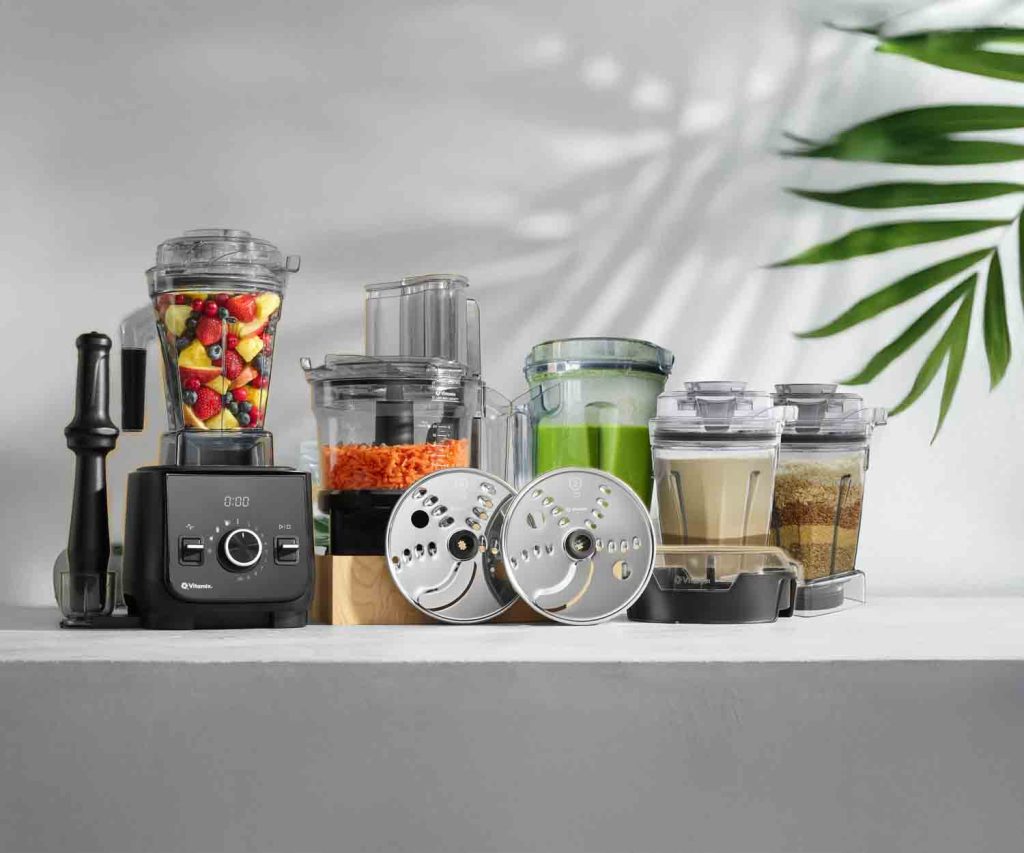
If you can afford the step up to an Ascent model like the X5, you should. Why? Compatibility is so important. The Ascent series works with the Food Processor Attachment and the 8-ounce and 20-ounce personal containers. That future-proofing is worth real money when you amortize it over a 10-year warranty.
Vitamix has actually underpriced those features given what they unlock. The people who skip the upgrade almost always wish they hadn’t.
You don’t need the big X5 bundle right away. But you will regret not being able to build upon your Vitamix system.
Mistake #13: Thinking you need a model without programs to “really learn” the machine
Programs don’t replace variable speed control. Every Vitamix has the full variable speed dial. So even if it has programs, you can use either.
Also, the programs are just timers. Like the popcorn button on a microwave. You don’t need ten. But having a few programs is worth it so you’re not always tethered to your machine.
Mistake #14: Getting the VX1 or 5200 if you have standard cabinets
The VX1 and 5200 are the two models that rarely fit under standard cabinets. Why does this matter?
Every Vitamix should live on your counter. The more you see it, the more you use it. The more you use it, the better your life gets.
If you genuinely can’t fit a Vitamix, consider moving the stand mixer down. When’s the last time you used it?
Choosing the right container
Mistake #15: Buying the dry grains container because you think you need it for nut butter
You don’t need a dry grains container to make nut butter. You can do it in a standard wet blade container.
The dry grains container is a specialty item for grinding whole grains into flour. Great if you’re grinding your dry grains today. Not necessary if you’re not.
Mistake #16: Misunderstanding minimum batch sizes
Thick blends have minimum batch sizes. Think: ice cream or nut butter. You need at least 3 cups to blend effectively in the 48-ounce. The wide, low-profile 64-ounce requires 4 cups.
Thinner blends like dressing may require less, like two cups.
Generally speaking, the 48-ounce container is the most versatile container you can get. It has the smallest minimum batch size with the largest capacity.
Mistake #17: Assuming the low-profile 64-ounce container performs the same as the tall 64-ounce
You get the same results, but the blend looks different. The narrow containers create that tight vortex. The low-profile 64-ounce makes ingredients move a bit more erratically.
If you want the classic Vitamix experience, make sure you get a narrow-bodied container. (All Vitamix blenders from Blending For Good come standard with a narrow-bodied container.)
Mistake #18: Thinking the 20-ounce personal container is great for single-serve smoothies
20-ounce personal cups for Vitamix blenders are good for small, not-super-thick blends. Where the 20-ounce really shines: dressings and spice grinds.
Don’t buy it expecting it to give you the same experience as your Nutribullet with a 32-ounce jar.
Related video: Vitamix 20-ounce & 8-ounce Blending Cup and Bowl Starter Kit Review
Mistake #19: Getting the stainless steel 48-ounce as your only container
The Stainless Steel Container is a great container. But it’s not ideal as your only container. You can’t see what’s happening inside it, which makes it harder to monitor blend progress. It’s also heavy and a bit sharp on the bottom edges requiring careful handling.
The stainless steel is best for hot, cold, and aromatic blends.
Common misconceptions
Mistake #20: Thinking all Vitamix blenders are equally loud
Every Vitamix blender is loud. They’re powerful machines. But they’re a different kind of loud than a Ninja or a cheap blender. A Vitamix sounds like an engine. A Ninja sounds like something is terribly wrong.
Yes, the premium models run noticeably quieter. It’s partly because the with true metal finishes, partly because the chassis higher quality.
Mistake #21: Thinking newer means lighter means worse
People like to say “they don’t make them like they used to.” Here’s how that relates to Vitamix: The new ones are a bit lighter than old ones. And generally heavy things signal quality. But these aren’t furniture.
Another example: A laptop from 2004 isn’t better than one from today just because it weighs more.
Vitamix has gotten better at building powerful motors in smaller, lighter housings. That’s engineering progress, not a step backward.
Mistake #22: Thinking a Blendtec is a true Vitamix alternative
Blendtec is the closest competitor in terms of blend quality. But Blendtec will never be able to break down seeds (raspberry, blackberry, chia, flax, etc) as well as a Vitamix. It’s the engineering.
Another difference: Blendtecs use a Twister Jar instead of a tamper for thick blends, which is a different experience.
Worth noting: Blendtec is now owned by a private equity firm. Vitamix is still family- owned. The former is a portfolio company and the latter is still innovating. Make of that what you will.
Mistake #23: Thinking you need a juicer instead of — or in addition to — a Vitamix
A Vitamix makes whole food juice. Made like that, you keep all the fiber. A juicer separates it out.
Juicers require you to clean a dozen small parts every single time. A Vitamix is one piece so it’s way easier to clean.
Most important, a Vitamix can do a dozen things. A juicer does one.
So if you’re choosing between a juicer and a Vitamix, get the Vitamix first. You can always add a juicer later if you decide you specifically want extracted juice.
Mistake #24: Missing out on dishwasher safe
The VX1 and 5200 are not dishwasher safe. Every other Vitamix model is. For most blends, all you need is warm water, a drop of soap, and 30 seconds on the cleaning cycle. You need the dishwasher. But having the option to put it in the dishwasher for a deep clean is a nice option to have.
If you’re coming from another blender brand, the ease of cleaning a Vitamix will genuinely surprise you. No removable blades. No crevices. No sharp edges to navigate around. It’s jus so easy to clean.

After you buy
Mistake #25: Not using the tamper
That black stick isn’t a throw-in. It’s the tamper! And it’s a feature of the Vitamix. Making nice cream? You’ll use it. Nut butter? You’ll use it. Smoothie bowls? You’ll use it.
If you’re making a thick blend and you don’t need the tamper, you’re probably doing something wrong. The tamper is a sign of success, not failure.
Mistake #26: Not running it on high speed
Most Vitamix blends should be done on Variable Speed 10. All the way to high. That’s where the machine is happiest. The cooling fans kick on and it’s doing what it’s engineered to do.
Start slow to pull ingredients down and avoid air bubbles, yes. But then ramp up to high. It sounds intimidating, yes. But the sound of an overworked Vitamix because it’s not turned onto high is worse. So let it rip.
Mistake #27: Ignoring the 50-50 ratio
Use roughly equal parts liquid to solid (ice & frozen fruit). That’ll keep ingredients moving efficiently. Too much liquid and you’re missing out on a nice thick blend. Too little and you’ll have a stagnant blob spinning above the blade. When in doubt: start 50-50 and adjust from there.
Mistake #28: Accepting that you bought a smoothie maker
Almost nobody buys a Vitamix just to make smoothies. But a lot of people let it become one. Seasonal smoothie phase comes around, machine gets heavy use, phase ends, machine moves back to a cabinet.
This isn’t a willpower problem. This is an approach problem. Nobody shows you what else it can do in a way that actually fits how you cook. Don’t let this happen to you.
The machine can make hot soup from cold ingredients in six minutes using friction alone. It can make ice cream from frozen fruit. It can make nut butters, dressings, batters, baby food.
You could built an entire tasting menu from Vitamix recipes. If you accept it becoming just a smoothie maker, you’re not using it like the best version of yourself.
Mistake #29: Not using the cleaning cycle
Run the cleaning cycle every single time. Add a drop of soap and some warm water, press start, walk away. It stops when it’s done. This is genuinely one of the best features on the machine and a lot of people never discover it.
Keeping this habit will prolong the life of your machine. Plus, cleaning it is so much easier if you do it right away (without letting it fester in the sink).
The mindset mistakes
Mistake #30: Thinking you’re not the kind of person who owns a Vitamix
A lot of people don’t think they’re worthy of one. We get it. We great up people would would have never got a $600 blender.
But a Vitamix isn’t a status symbol. It’s the single best kitchen tool for eating better, cooking more, and exploring food in a way that sticks. If you care about what you eat, this is the tool. Not a juicer, not a food processor, not an air fryer. This.
Mistake #31: Keeping a blender you loathe because it still technically works
Don’t wait until it dies. There’s a sunk cost fallacy at play here. If you’re genuinely into this lifestyle — smoothies, cooking, eating well — and you’re using a blender you hate, stop waiting.
Is it true that you wouldn’t choose what you have today given what you know now? Then just be done with it. If there’s truly more life in your current blender, give it to a neighbor.
Life is too short to be stuck in a bad relationship.
So which Vitamix should you actually get?
If you want the simplest answer: get the best one you can afford. For most of us fortunate enough to have had the time to read to the end of this very long guide, it’s the Ascent X5, very possibly as part of the X5 BFG Bundle.
It’s the model we’d buy today if we were starting over. Self-detect containers, a quieter motor, a sleek profile, and full compatibility with every Vitamix attachment that exists or will exist. It’s future-proofed in a way the other models aren’t.
If you have questions about a Vitamix purchase, just ask. We’re at blendingforgood.com and we are here to help.
Lenny Gale has been writing about Vitamix blenders professionally since 2012 and countless people have bought theirs from him. He and his wife Shalva run Blending For Good, an authorized Vitamix dealership and little membership for Vitamix owners based in Minneapolis.